

I tried to get the name of our publication changed on the accreditation badge I use to access the Venice Film Festival, but I didn’t manage to. It reads “Ombreeluci.” All one word. It’s true that the magazine’s name recalls how our lives alternate between shadows and light, between bad things and good ones; but written all together like that, there seems to be no clean break — rather a sense of continuity. Often that’s true of films too, or at least the good ones: in life as in cinema, there are countless shades, often more interesting than clear-cut ideas. Here is a first selection of feature films at Venice 83 whose themes move between shadow and light.
Wild Horse Nine
Venice 83 Competition
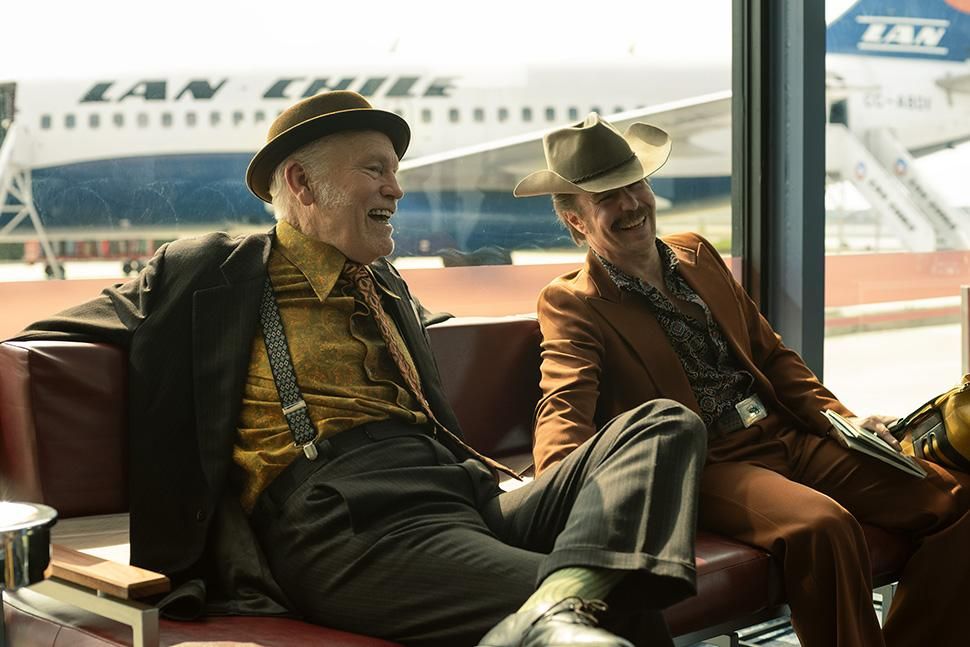
Can you laugh at a dying man who also has obvious memory problems? A man who worked for the CIA and probably committed extremely serious crimes? You can, if the film is written and directed by Martin McDonagh, who once again proves himself an excellent writer, a superb director of actors, and someone with a sharp eye for capturing the spirit of a place. This time the setting is truly unusual and rarely seen on screen: Rapa Nui, Easter Island. There, in 1973, two CIA agents stationed in Chile go on vacation: the elderly Chris (John Malkovich, who won the Volpi Cup for this role) and his friend Lee (Sam Rockwell). It could be their melancholy last trip together. Chris no longer remembers why he asked Lee to come here, and he’s also stopped guarding the secrecy of his profession — at one point he even lets slip to strangers the detailed plan for the September 11 coup in Chile. Nearing the end of his life, is he perhaps regretting what he’s done, and what he already knows is coming, in an unrepeatable blending of past and a future we sadly perceive as already written and unchangeable? Perhaps what he feels isn’t regret so much as the exhaustion of someone who has manipulated history for too long and can predict that things won’t get better. There’s plenty of laughter at Chris’s senile slip-ups and Lee’s clumsy attempts to contain him, but there’s also much more serious reflection on how the legacy of manipulation and violence the two agents embody has rippled down to our own times — something the forgetful Chris, ironically, helps us never to forget.
Mr. Nelson, Did You Kill People?
Venice 83 Competition
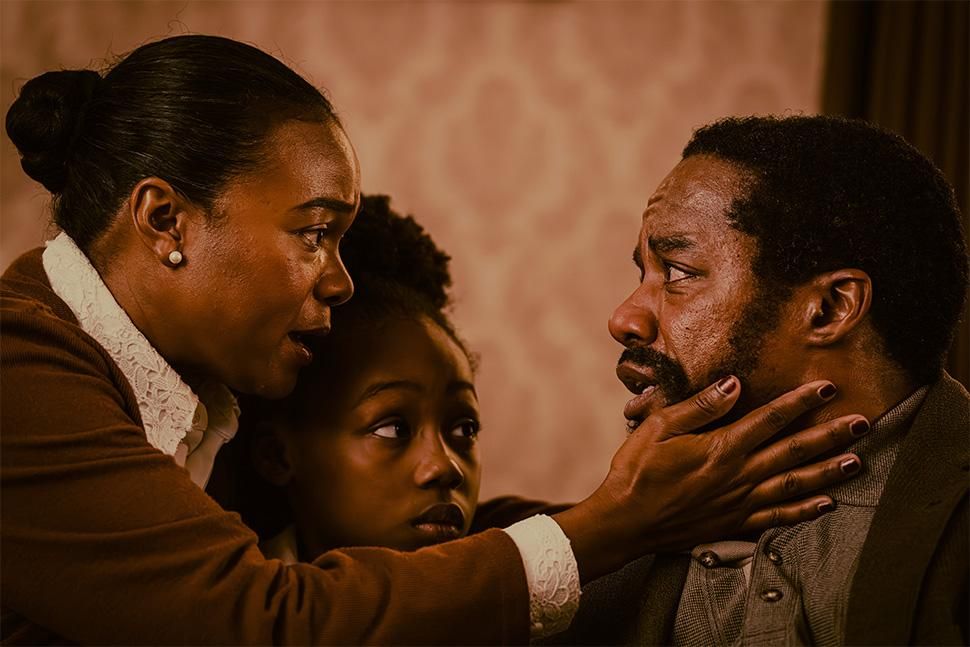
The first English-language film directed by Japan’s Tsukamoto Shin’ya is inspired by the life of a Black American soldier, a Vietnam veteran. Allen Nelson is better known in Japan — where he was also buried — than in his own country, because it was there he gave many talks about his wartime experiences. The film spans a timeframe as long as the years-long therapy that can help, but never fully heal, a veteran’s post-traumatic stress: when Nelson began his sessions (his therapist is played by Geoffrey Rush), there was still no established research on how to treat the condition. The therapist always speaks calmly and quietly, which makes the jarring acoustic contrast with the war flashbacks — whose sounds are extremely violent — even more striking. Tsukamoto doesn’t shy away from showing war in all its brutality, but it’s the sound, even more than the images, that truly shocks. It’s a necessary jolt, one that helps us understand just how hard it is for war survivors to forget and move forward — especially without help from others.
15/18 (A Place to Heal)
Venice 83 Competition
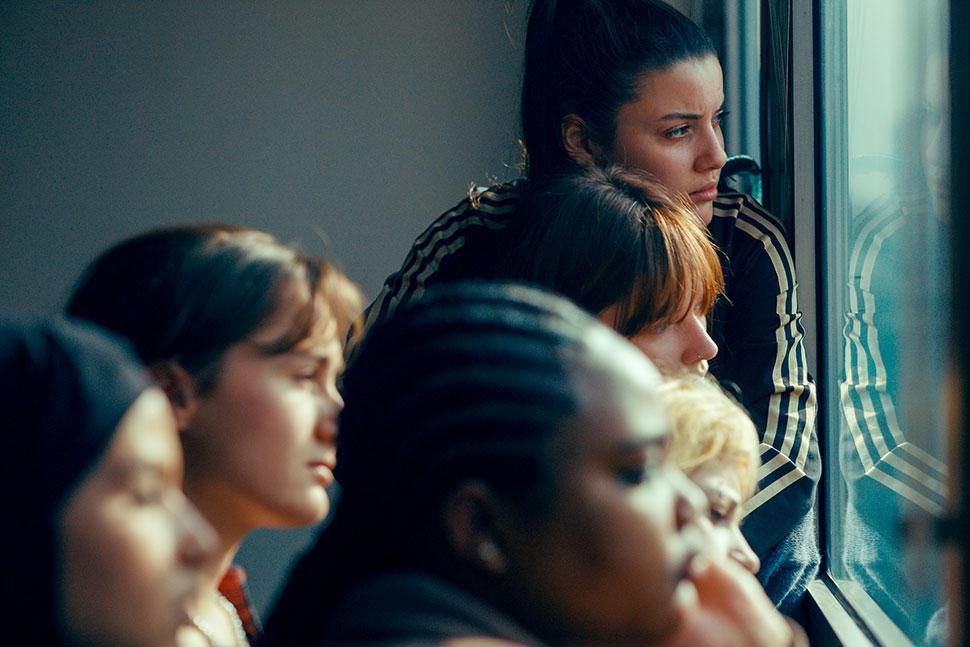
Set in the neuropsychiatric ward for teenagers aged 15 to 18 in a public hospital, Cédric Kahn’s film tries to enter the daily lives of young patients whose experiences are linked by the place they’ve ended up in, but wildly different in the reasons that brought them there and in their attitude toward confinement — which, fortunately, is never inhumane. Some commit to getting better by following their therapy, some have no trust in the system and just want to escape, and some already seem headed toward irredeemable delinquency once they reach adulthood. Medical staff are a strong presence too, but the direction focuses mainly on trying to understand the teenagers’ attitudes and actions, and only secondarily on observing those who treat and supervise them — who hold the difficult dual role of wielding authority and bearing therapeutic responsibility. Although some characters stand out, the film is an ensemble piece, aiming to realistically portray a collective system of care and prevention and the web of relationships it creates, rather than focusing solely on individual human stories. Malou Khebizi, one of the young actresses, won the Mastroianni Award.

Look Back
Venice 83 Competition
Based on the manga by Fujimoto Tatsuki, Kore’eda Hirokazu’s film is a small, tender story of friendship between two girls who both love drawing. In fourth grade, Fujino draws popular comic strips for the school newspaper; then Kyōmoto begins contributing too — a girl nobody knows because she’s a non-attending student, a “hikikomori” (a term for young people who rarely or never leave their rooms, out of fear of human contact). Fujino resents the competition, but by pure chance she ends up helping Kyōmoto leave her room, changing both their destinies. Where the manga was a self-reflexive celebration of the act of drawing, the film highlights the complementary relationship between narrative and graphic elements in visual art, and more broadly the desire to write one’s own life as if it were a work of fiction. Giving direction to one’s life doesn’t erase the possibility of regret, or the wish to go back and change things, as if the flow of time could be traveled both forward and backward; accepting that this isn’t possible, and accepting instead what life has handed each of us — partly as a result of our own choices — is part of the coming-of-age journey this film portrays.
I figli della scimmia
Orizzonti Competition
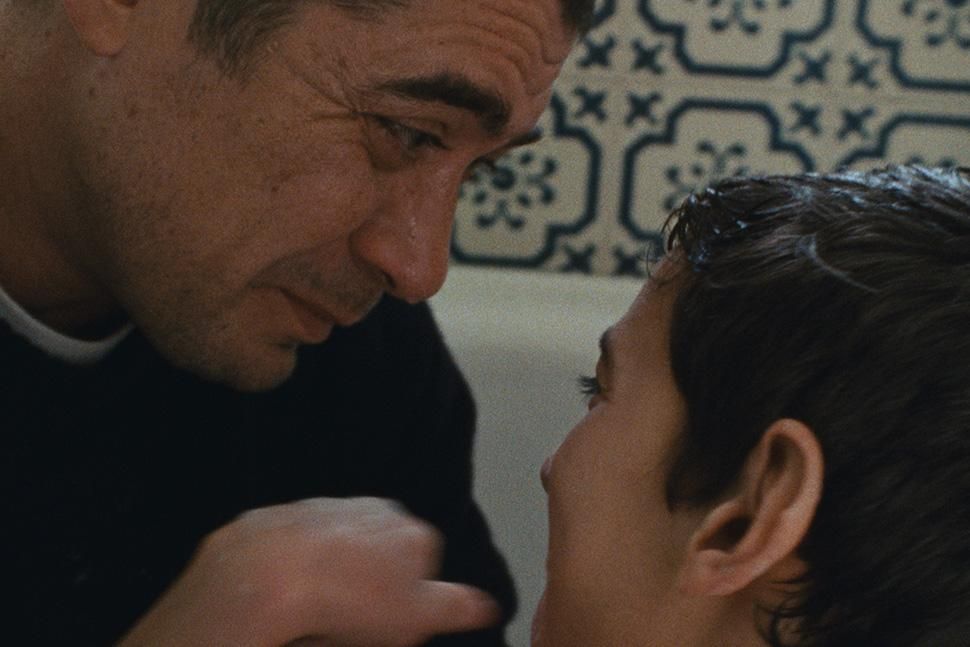
Dario (Riccardo Scamarcio, winner of Best Actor in Orizzonti) and Roberto (Fausto Russo Alesi) are brothers, both married with children. Giacomo, Roberto’s son, is a teenager navigating the typical challenges of his first year of high school, from schoolwork struggles to first love. Enrico, Dario’s son, has a severe disability and is not self-sufficient. Dario cares for Enrico with love, alongside his wife, but he also develops an increasingly close bond with his nephew Giacomo — one that lets him experience the kind of parental moments his son’s disability makes impossible. In cinema, realistic portrayals of disability are almost taboo; representing the complex and ambivalent feelings of parents of children with disabilities — caught between love for the child they have and grief for the child they might have had (sometimes glimpsed, involuntarily, in other people’s children) — is a double taboo, because it risks calling into question the very human worth of their role as parents. Tommaso Landucci’s film, which won the Orizzonti award for Best Screenplay, tackles these taboos with courage, also building a useful contrast between the father’s and mother’s approaches — one that probably owes something to the fact that Enrico is a boy, since the father-son dynamic tends to generate the most unresolved family tension. Scamarcio takes on the difficult task of visually conveying a series of unspeakable thoughts as he searches for a new balance in the time and attention he devotes to nephew and son (the latter played by Andrea Aggio, a debut actor who has cerebral palsy), while his wife’s journey moves in the opposite direction, pushing her ever further toward defending her overprotective maternal role against any external threat, even an emotional one. At a certain point it would be easy to build a moral hierarchy between the two parents; instead, the film’s strength lies precisely in refusing that easy path, choosing instead to understand everyone’s reasons, while being brutally honest about how emotionally and practically exhausting it can be to be part of a family with a child who has a disability. If there’s a hierarchy worth dismantling, it’s the one placed on the value of experiences one can share with a child: when the film shows how Dario spends time with his nephew, and then how he spends time with his son, is it really Dario — or our entire cultural system — that makes us perceive a difference in value between activities requiring the very same degree of attention, love, and presence? I figli della scimmia opens in Italian cinemas on September 17.
The Road to Jericho
Venice Open - Out of Competition - Non-fiction
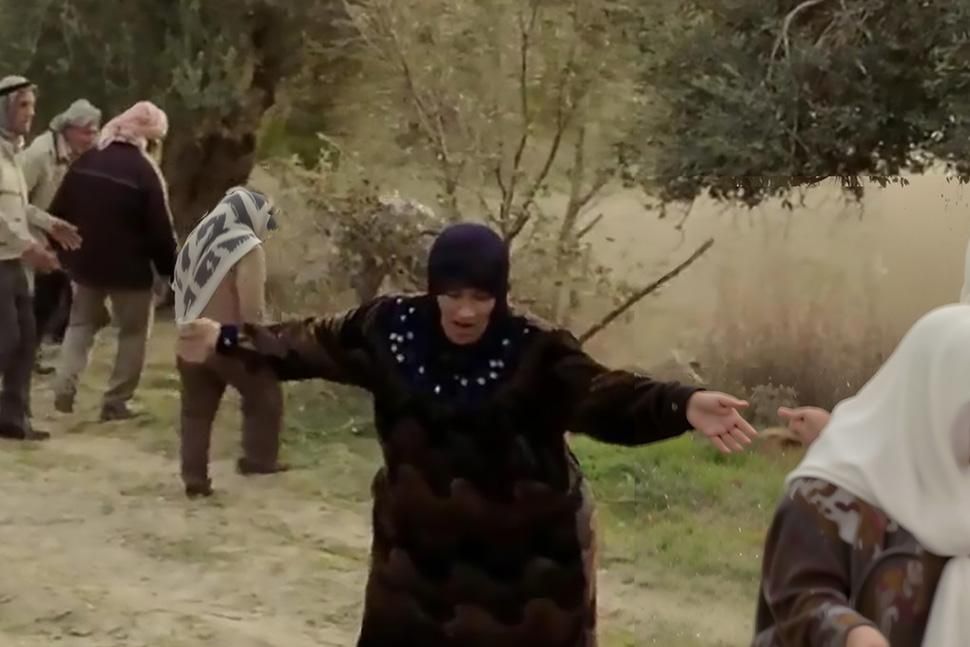
Two hallmarks of Israeli director Amos Gitai are his longstanding support for peace with the Palestinians, and his highly self-referential body of work. There’s nothing truly new in this documentary, which weaves together footage from his older films with staged excerpts inspired by great literary authors, performed by well-known actors, to create an ideal journey toward Jericho, a city in the West Bank reached via roads that settlers have made dangerous for Palestinians. Gitai essentially shows that a great deal has already been said about the Israeli-Palestinian situation, but that attempt to untangle its complexity and find a path to peace has been ignored.

They’re Here
Venice Open - Out of Competition - Short Films
Footage of ICE (the U.S. federal immigration agency) agents at work has shown us a police force that often acts without regard for the law, and systematically without regard for people’s human dignity. This short documentary by Laura Poitras and Rachel Lauren Mueller, filmed in Minneapolis, alternates between the perspective of those who feel hunted and that of those exercising their civil right to film ICE’s actions in order to expose them. The city streets may look ordinary, but a slow destruction of the social fabric is underway day and night: this film is the antibody, the response of those who refuse to fall into the spiral of violence and instead fight back with the power of images, information, and civic engagement.