

If Mike Leigh really is leaving cinema behind, it won't be for lack of passion. The British director is one of the most important filmmakers alive, one of the few to have won both a Palme d'Or at Cannes and a Golden Lion in Venice, and has been nominated seven times for an Oscar; at 83, however, he has explained that he is no longer able to work on set. He has myositis, which severely limits his movements: during the San Sebastián Festival he reiterated that his new film Tender Loving Care will almost certainly also be his last. He announced this at a press conference via video link: already on tour at North American festivals, his condition did not allow him to travel to Spain to accompany the film in person. If this truly is his final work as director, though, we can say he has brought his career to a fitting close: at San Sebastián he won the festival's top prize, the Concha de Oro (sometimes translated into English as the Golden Shell, though this loses the connection to the city's main beach, La Concha, whose shape is echoed in the festival's logo and award). Rounding out a true triumph, the film also picked up the award for Best Screenplay, a shared Best Actress award for Kate O'Flynn, and the Transforma Make & Mark Award, a special prize for a film committed to a fairer society. Besides Leigh's film, which we hope to see in Italian cinemas soon, the festival, as always, also presented other works that portrayed contemporary society—and the society of the past—with care and humanity.
Tender Loving Care
Official Selection
Rosie and Amy (played by Alice Bailey Johnson and Kate O'Flynn) are two friends and flatmates in their forties who both work for the British social services: it's a job that occasionally brings real satisfaction, when they manage to actually help someone in need, but also plenty of frustration, when help isn't enough or is refused out of pride or distrust in the system. Amy has two elderly parents (Paul Jesson and Marion Bailey) who form a close-knit, still very active couple—until her father suffers a serious health problem. Caring for someone else, for her and her inseparable friend, suddenly becomes a family matter too. In the two protagonists there is a crossover—an especially particular one here—between the care provided by the welfare state and the care offered by family, which in reality often has to make up for the shortcomings of public services; for them it's a natural transition, though an emotionally draining one, and it's precisely this event that director and screenwriter Mike Leigh uses to explore the problems and possibilities of caring for others. The spare direction, built on direct dialogue shot almost entirely indoors, serves perfectly here Leigh's intent to be clear without ever being simplistic. The final shot—perhaps the last of Leigh's entire filmography—is the only one that leaves real room for interpretation, a close-up that seems to ask us what's going wrong in the policies meant to support the neediest citizens in wealthy Western countries.
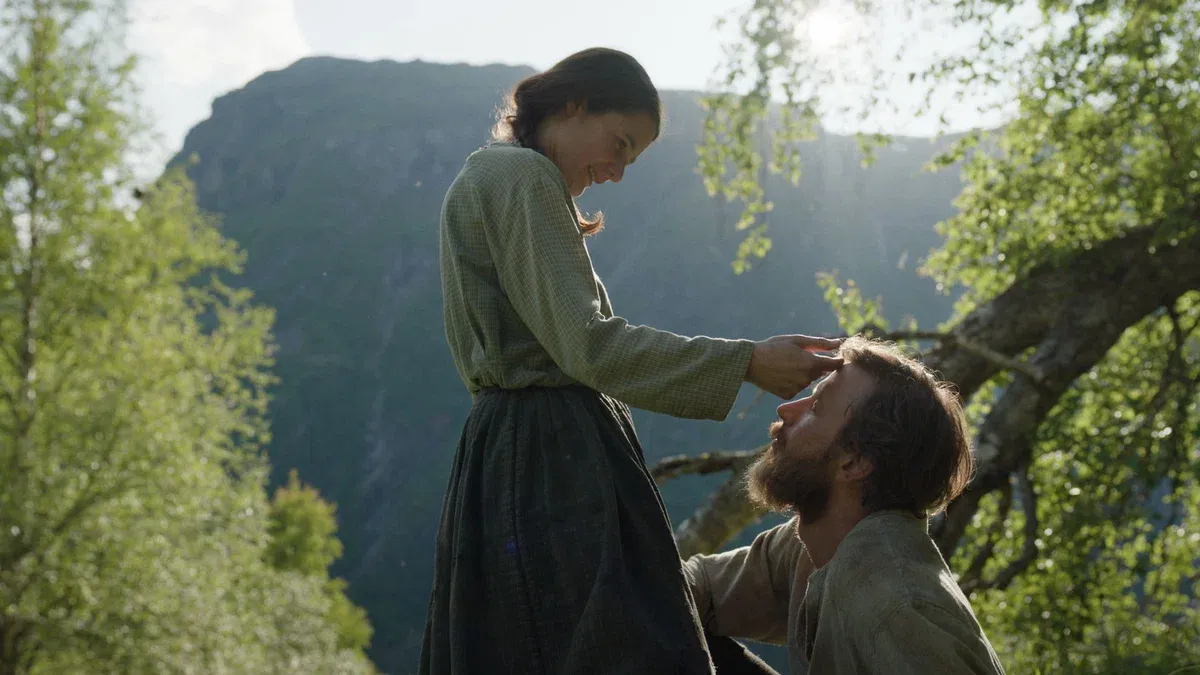
Markens Grøde (Growth of the Soil)
Official Selection
Directed by Hans Petter Moland, this film is based on the novel Growth of the Soil, for which author Knut Hamsun won the Nobel Prize in Literature in 1920. The story begins roughly at the start of the last century, when Isak (Herbert Nordrum), a farmer who has decided to brave the harsh Norwegian wilderness to build an outpost on his own, meets a woman who is also alone, Inger (Asta Kamma August, who shared the award for Best Actress). Becoming a couple, over the years they build a house, buy livestock, expand their land, and start a family. It's partly a romantic idyll made stronger by years of hardship, but then something breaks: Inger commits a grave act, leaves her husband for a while, and when she returns, it seems their shared view of the world is no longer the same. When Inger first appears, she is guarded and withdrawn because of a cleft lip that has always drawn contemptuous looks from others; partly for this reason, her unexpected bond with Isak, who loves her, becomes very strong. But when Inger undergoes corrective surgery, her changed face also changes her relationship with her husband, because in a broader sense he represents a conservative ideal, while she represents the progress that brings both small and sweeping changes: the evolution of their marriage thus becomes a metaphorical clash between tradition and progress, each with its own strengths and flaws.
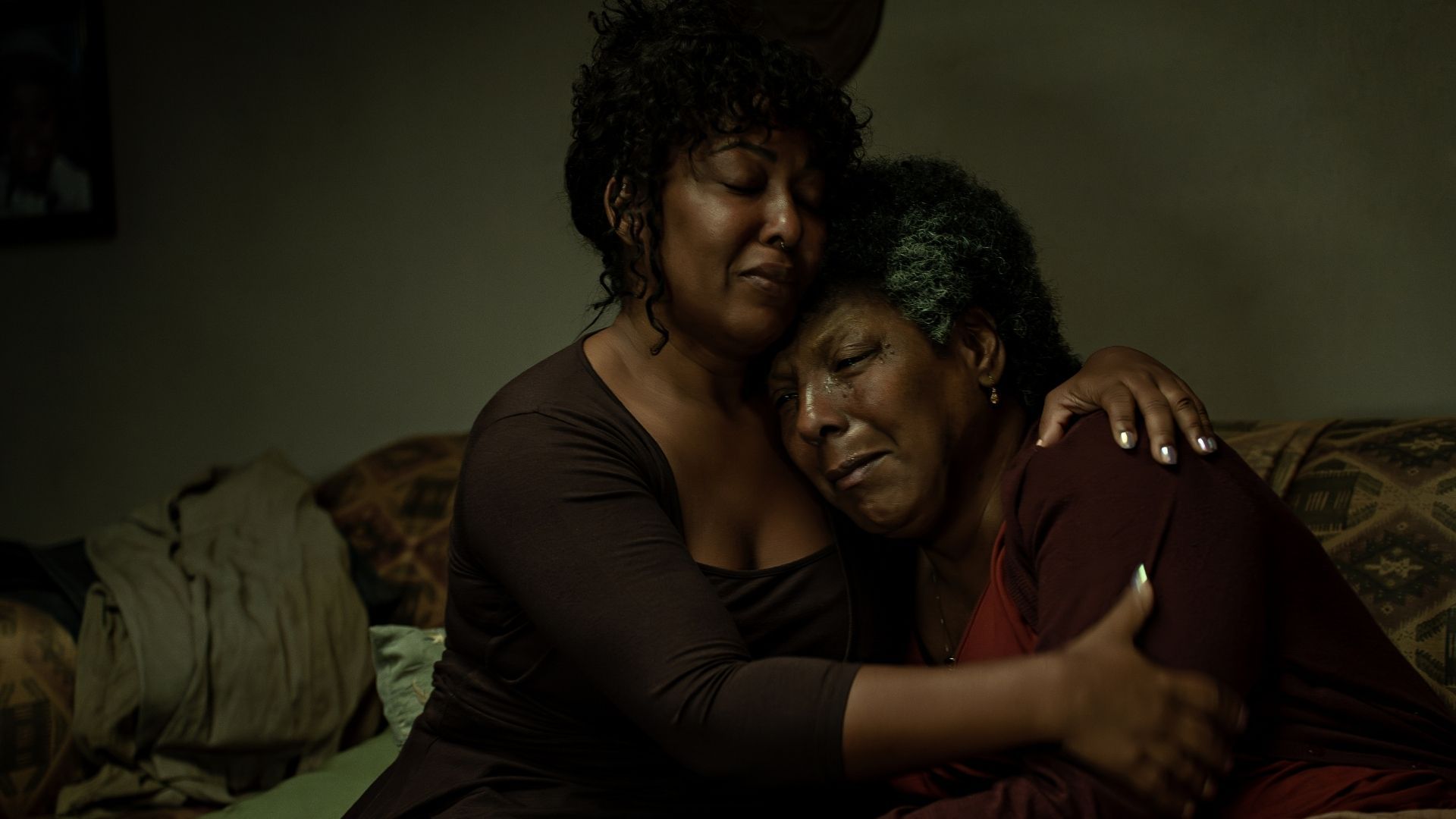
Vicentina Pede Desculpas (On Behalf of My Son)
Official Selection
An accident on the streets of Belo Horizonte involving a bus causes deaths and injuries, including the driver's; even as the investigation is just getting underway, rumors spread that the driver himself may have caused the crash on purpose. Whatever really happened, the driver's mother, Vicentina (Rejane Faria), feels guilty: she gets hold of the list of victims, contacts their families, and meets with whoever is willing, with a single goal—to apologize, because as a mother she feels fully responsible for everything her son has done. These repeated encounters throughout the film have different outcomes—Vicentina is met, each time, with empathy, respect, irritation, or anger—but they are always deeply painful; and one wonders whether it is right that Vicentina should bear the weight of this objective responsibility on top of the grief of having lost a son. No moral dilemma is resolved, but Vicentina's actions stand as a powerful, courageous example of how grief need not become armor that isolates us from others, but can instead fuel mutual understanding. Directed by Gabriel Martins, the film will be available on Netflix on November 20.
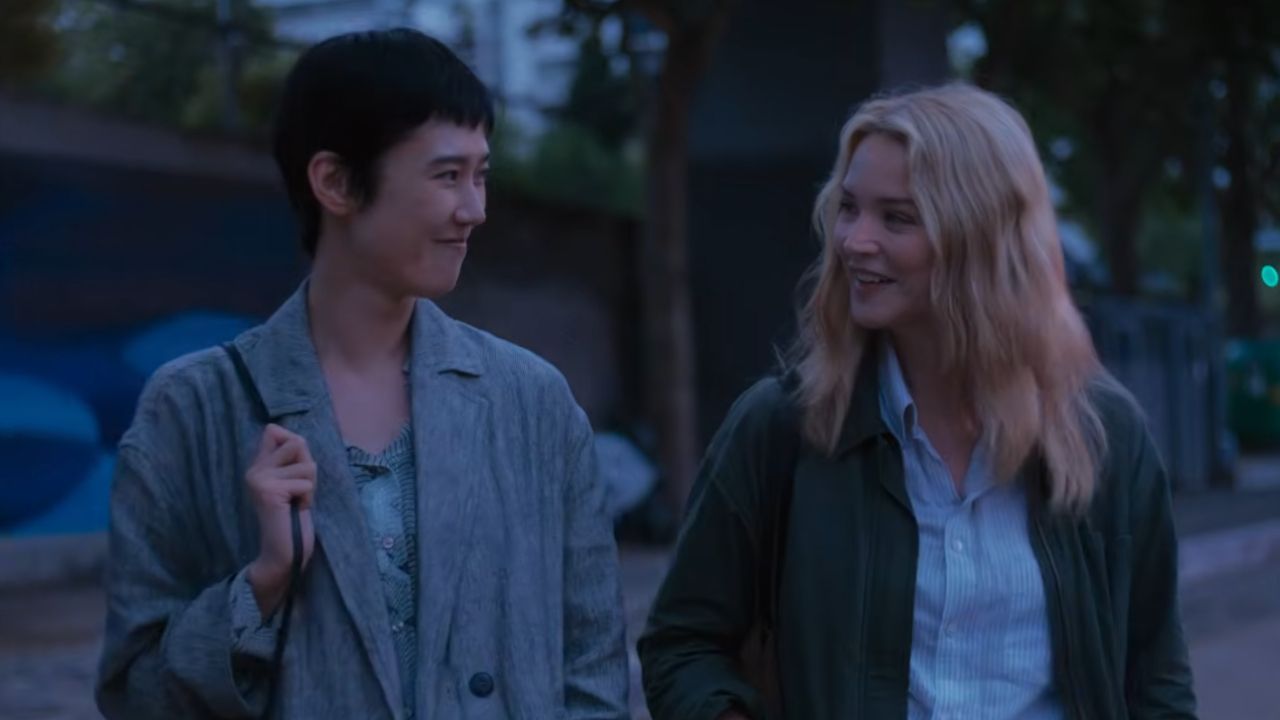
Suddenly (Soudain)
Perlak
The section dedicated to the year's cinematic "pearls," films already shown at other festivals, is among the most beloved by San Sebastián audiences, who vote to award two prestigious audience prizes. Shown in this section was the latest film by Ryūsuke Hamaguchi, one of the finest of 2026, for which its two leads, Virginie Efira and Tao Okamoto, were honored at the Cannes Film Festival. A chance encounter leads two women to become close friends, bonded by an elective affinity, within just a few hours: Marie-Lou runs a care home for elderly people with dementia, where she is trying to introduce the "Humanitude" care method, based on a respectful, proactive relationship with patients; Mari is a Japanese playwright presenting a show in Paris inspired by the life and work of Franco Basaglia, performed by an actor who cares for a nephew with a developmental disorder who is allowed to burst onto the stage during performances. Mari, sadly, has an incurable cancer and little time left to live; what little time she has, however, is filled by her intense bond with Marie-Lou, by intellectual and emotional exchanges that echo through the activities at the care home, and by her relationship with illness, treatment, and death. It sounds sad, and in part it obviously is, but the film shines above all with extraordinary, heartfelt humanity and a genuine love of life. It is inspired by the book collecting the letters between philosopher Makiko Miyano and medical anthropologist Maho Isono. It will be released in Italian cinemas in early 2027.