

This year it felt more like Berlin than the Venice Lido. Not because of the weather — though the shift to early September made the festival less stifling — but because political cinema dominated the conversation, perhaps partly due to the absence of big Hollywood titles. In the end, female representation overshadowed other political themes tied to labor and the war in Gaza. At the opening press conference, jury president Maggie Gyllenhaal joked that there were only two women directors in competition because men make better films; at the closing press conference, she joked again that she'd chosen the winning film simply because it was directed by a woman, without even having seen it. Many were surprised when the Golden Lion went to Kvinde ukendt (Woman Unknown) by Danish director Mayy al-Tukhi, but while it's fair to say there were stronger titles in competition, the decision isn't entirely baffling. The film had in fact been fairly well received, even if not with the enthusiasm reserved for the festival's most acclaimed works.
Woman Unknown centers on a Danish woman in the aftermath of World War II, during a period of denazification marked by brutal violence against former collaborators: such a powerful role that lead actress Mathilde Arcel, previously known only in Denmark, won the Volpi Cup for Best Actress. Marie, a former nanny and housemaid, is about to marry her wealthy, widowed employer — a man much older than her, with a young daughter. The marriage offers her a remarkable social rise, but she must keep a secret from her past tied to the Nazi occupation. The bleakness of the Danish town where the story unfolds isn't just visible in the gray streets, but also in the blind ferocity with which anyone suspected of collaboration is publicly attacked: many women, in particular, go from being objects used by German soldiers to objects of humiliation at the hands of their own countrymen.
Marie, then, is lucky to find herself in such a favorable position — and yet she barely smiles, keeping her emotions tightly controlled. It's almost always through some subtle shift in her facial expressions that we sense something is wrong, and we can only guess at fragments of her past, which is hinted at but wisely never fully revealed. Female victims of conflict are often invisible and unknown (hence the film's title) and Marie, who does everything she can to avoid becoming one of them, also tries to make herself invisible so as not to squander the chance at economic and social security that marriage offers. But there's no real love in her life, and even the house she's beginning to run is swallowed by grayness, oppression, and cowardice, until it seems barely more bearable than the misery outside. Marie is the victim of more than one injustice, but these injustices only push her to defend herself at any cost, risking the very dignity she has always fought to preserve.
Now that the festival is over, many of the films we saw at the Lido will be heading to theaters. Among them are nearly all the titles in this third and final dispatch from Venice 83, which runs all the way up to the very last film screened, right after the closing ceremony.
NAZA
Venice 83 Competition
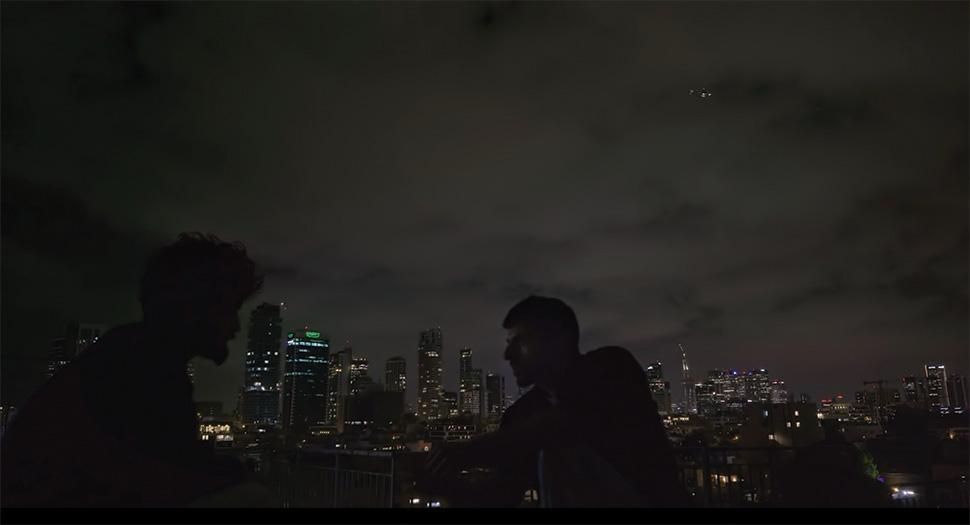
This documentary directed by Yuval Abraham and Rachel Szor — two of the four directors behind the acclaimed No Other Land — was one of the most anticipated films at the festival, and it won the Special Jury Prize. It's an attempt to create a cinematic version of already-published journalistic investigations: on the rooftops of Tel Aviv, Abraham interviewed numerous IDF (Israel Defense Forces) members who described the techniques used to attack the Gaza Strip. The term NAZA refers, in military slang, to collateral victims — civilians, including children — whose deaths are accepted as the cost of hitting military targets, but in numbers that are disproportionate and inhumane.
The witnesses' faces and voices were digitally altered to protect their identities; this strips away some of the force of their gazes, but hearing the words rather than reading them in a newspaper still carries a strong impact. The fact that this information was already known suggests the goal was to reach a different, broader audience. Still, despite the understandable difficulty of steering a conversation with someone already taking a considerable risk by speaking out, there's a lingering sense of regret over topics only briefly touched on and never fully explored — like the use of big data and artificial intelligence to identify and eliminate enemies, issues that could potentially affect everyone in the future. The choice to shoot the entire film at night, on rooftops, works particularly well, even if it was driven mainly by safety concerns rather than aesthetics; from up there, you can observe the city without being seen, echoing the very logic behind Israel's absolute control over Palestinian territories.
The camera can observe quiet domestic life inside homes, where televisions show images of a war unfolding elsewhere, seemingly affecting other people, without disturbing the calm at home; it captures the imposing scale of a city that is still young and architecturally modern, yet also built by forcibly expelling Palestinian residents — a city where the IDF headquarters looms large; it even catches posters for a retrospective on Claude Lanzmann's films about the Holocaust, which inevitably steer conversations toward the founding trauma of the Jewish state and how its memory still shapes the Palestinian question today. This is journalism, albeit in a successful cinematic form: there's no judgmental gaze toward the interviewees, because the information they provide matters more than the opinions viewers will, of course, go on to form for themselves.
Un bon petit soldat
Venice 83 Competition
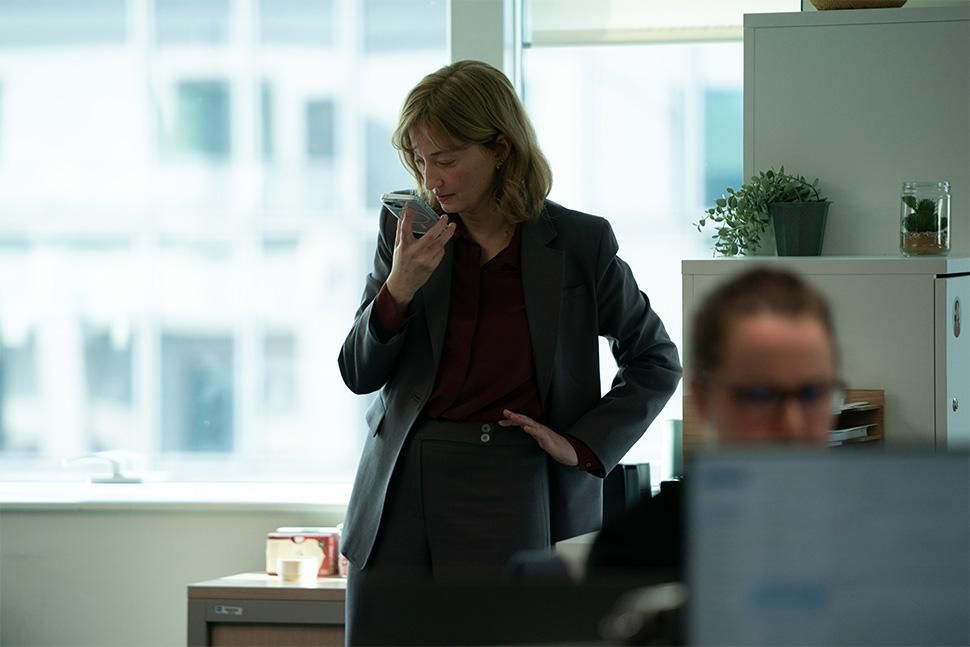
A superb Alba Rohrwacher plays Carla, an Italian HR executive newly hired by a major French insurance company. Her first task is to oversee an ad campaign aimed at attracting young graduates: it portrays the workplace as inclusive for people with any kind of disability. Everyone says they're satisfied — except the CEO, who flies into a rage, insisting that no one would want to work alongside people with disabilities. At that point, everyone in the room admits they actually agree with him.
This opening scene, which forcefully confronts viewers with their own deepest biases, immediately establishes the kind of workplace director Stéphane Brizé (who won the Best Screenplay award alongside Coralie Amédéo and Olivier Gorce) has depicted: pragmatic, sexist, competitive to the point of cruelty, with no room for kindness. To use the term that sums it all up: toxic.
Carla finds herself handling other situations where the company demands ruthless solutions rather than empathy toward employees facing difficulties — an approach that wears her down so much it starts to affect how she behaves as a mother. This troubling bleed between work and private life shows in how she takes out her accumulated frustrations on her son, from an office she seems never to leave (indeed, the only contact we see with her son is over the phone).
She's not a hero ready to sacrifice herself for a fairer, more inclusive workplace — she has no power to do so, even if she had the ambition — but she is one of many victims of an economic system that puts profit above human wellbeing at every turn, a wellbeing hypocritically paraded only in advertisements. A tough but necessary film.
Kami nour (A Bit of Light)
Venice 83 Competition
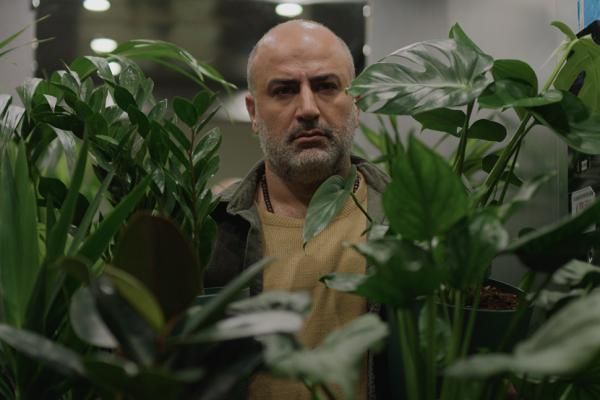
An Iranian doctor, arrested and then released but stripped of his license, decides to end his life. First, though, he wants to personally say goodbye to his brother, his two sisters, and — with their help — above all, his elderly mother. The Iran he lives in is no longer torn only by violent crackdowns on young people demanding more freedom; now war with the US has made every day feel precarious.
His firm decision reflects a willingness to surrender to a reality that has become unbearable, as it perhaps has for many Iranians. But in facing his loved ones, he must each time remind himself what's driving him to give up on life and hope, and reconsider whether it's really worth it, or whether, unexpectedly, a bit of light can always be found.
Director Ali Asgari makes the most of a minimalist approach, sometimes to devastating effect: what happened in the protagonist's medical office, the event that got him into trouble, is never shown directly, yet we seem to see it in full detail, relying only on the state of the room and the overwhelming inner suffering visible on the face of the man observing it. Every secondary character, even those who appear for only a few seconds, helps convey the complexity of Iranian society, where those who have suffered greatly coexist with those who selfishly want no trouble, where the brave and the cowardly exist side by side, and where acts of kindness range from bold to simply generous.
Every scene, every image, tells us something unspoken about the protagonist, the other characters, and the people of Iran's cities, as if the simplicity of the plot needed the richness of countless details in dialogue, movement, set design, and furnishings to make us feel emotions too deep for the screen to fully contain. It begins as a story of defeat, then reminds us that despair and a love of life can coexist, even on what might be the protagonist's final day.
Ritorno a Buenos Aires
Venice 83 Competition
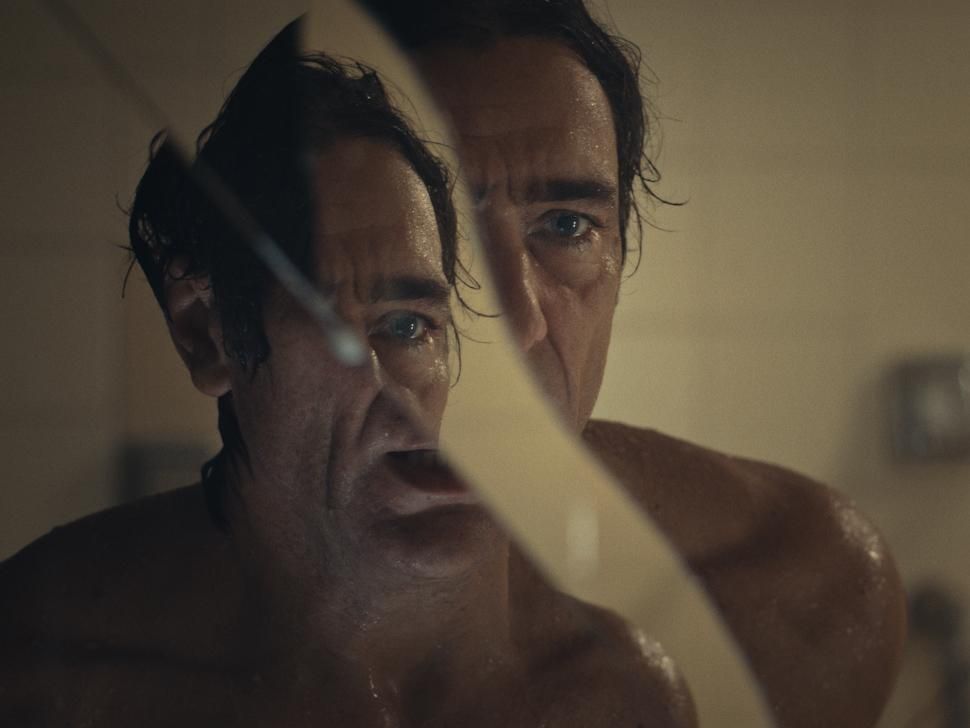
Marco Bechis returns to a tragedy he lived through firsthand and had already addressed in 1999 with Garage Olimpo: the detention camps of Argentina's military dictatorship, which began in 1976 and from which countless desaparecidos never emerged alive.
This time, rather than returning directly to those events, he sets the film in 2008, during one of the trials against the dictatorship's perpetrators. An Italian man, Mariano Guerra (played by Adriano Giannini), is summoned to testify because as a young man he lived in Argentina and was imprisoned for more than two years. Reluctant, he decides to go anyway: he's not only afraid of reliving deep pain, but also carries a heavy sense of guilt over what he was forced to do in order to survive.
With direction that never indulges in spectacle and remains consistently restrained, Bechis shows us just how hard it is to overcome the trauma of a historical period that, for so many others in the same circumstances, ended in death. What's most unsettling is how, confronted with places and people from his past, his body shows it has retained the memory of those years of imprisonment, as if the body prevented even the mind from forgetting. Although the ending feels rushed and overly consoling, with the protagonist's inner turnaround coming too quickly, it's a work that captures well the disorienting anguish of the survivor.
La maison du vent
Orizzonti Competition
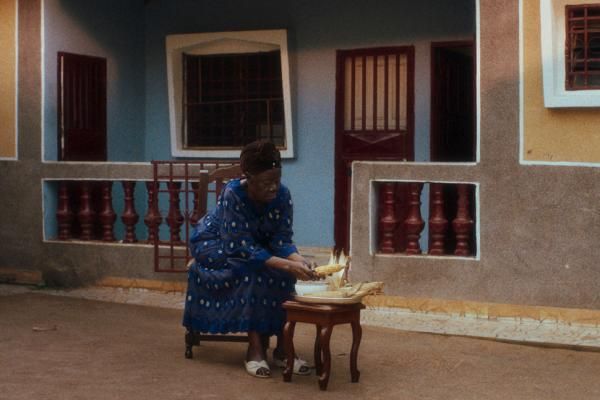
A double win, from two different juries, for one of the rare African films in the selection, directed by Cameroonian filmmaker Auguste Bernard Kouemo Yanghu: the Lion of the Future (for Best Debut Film) and the Orizzonti Special Jury Prize.
The director had to give up his Cameroonian citizenship when he obtained French citizenship. His mother stayed behind in Yaoundé, Cameroon, while all his brothers and sisters emigrated. His mother, Josette, plays a woman with the same name and the same fate: alone at eighty, in her own country, because her sons and daughters all live elsewhere.
This is the perspective on emigration we rarely consider: that of those who choose to stay, and since it's mostly the elderly who remain, it's also the story of a system that drains African countries of youth and future, offering the elderly no comfort beyond the joy of feeling surrounded by their own people. Josette, then, wants to build a house to bring a son back home: she tries to erect something that goes beyond a building, a safe harbor for herself and her loved ones, to defeat loneliness and fear.
Quelques instants de bonheur
Orizzonti Short Films Competition
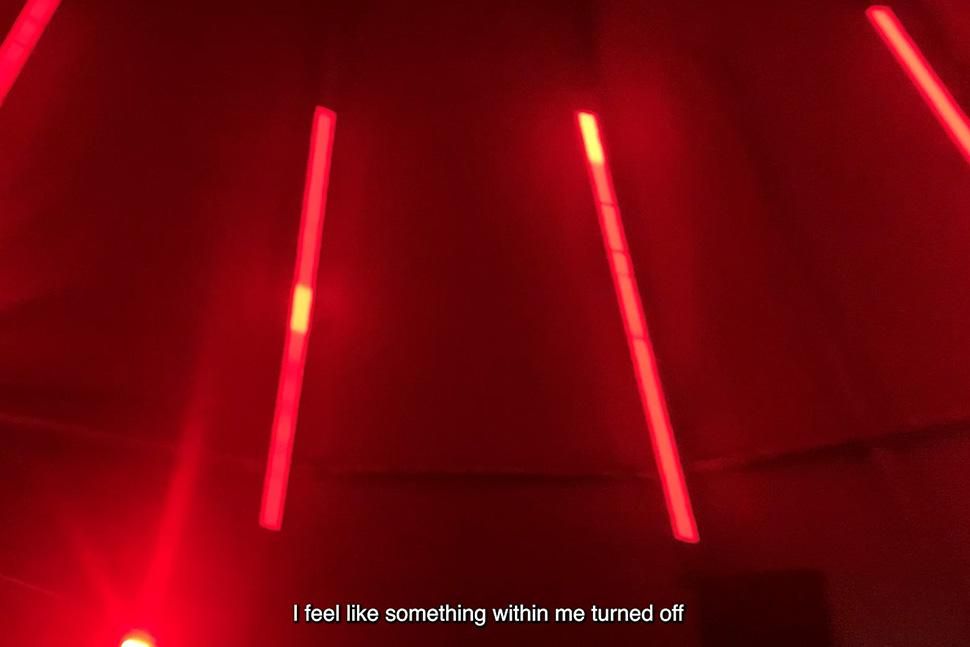
The winning short of the Orizzonti section is a collage of audio and video recordings from a mobile phone, with footage shown in vertical format. Lebanese director Shaden Safieddine Tazi, while in Paris, gathered and edited her father's voice along with videos sent to her, piecing together the stream of information reaching her from a Lebanon once again at war with Israel.
The helplessness of witnessing secondhand, the pain of something happening far away, the sense of insecurity and instability felt from a position of comfort that suddenly feels uneasy — all of this makes the gulf between living through a war firsthand and living it through other people's accounts deeply palpable, in an era when feelings are amplified by the ability to learn, almost in real time, what's happening even thousands of miles away.
Agata the Writer
Giornate degli Autori - Competition
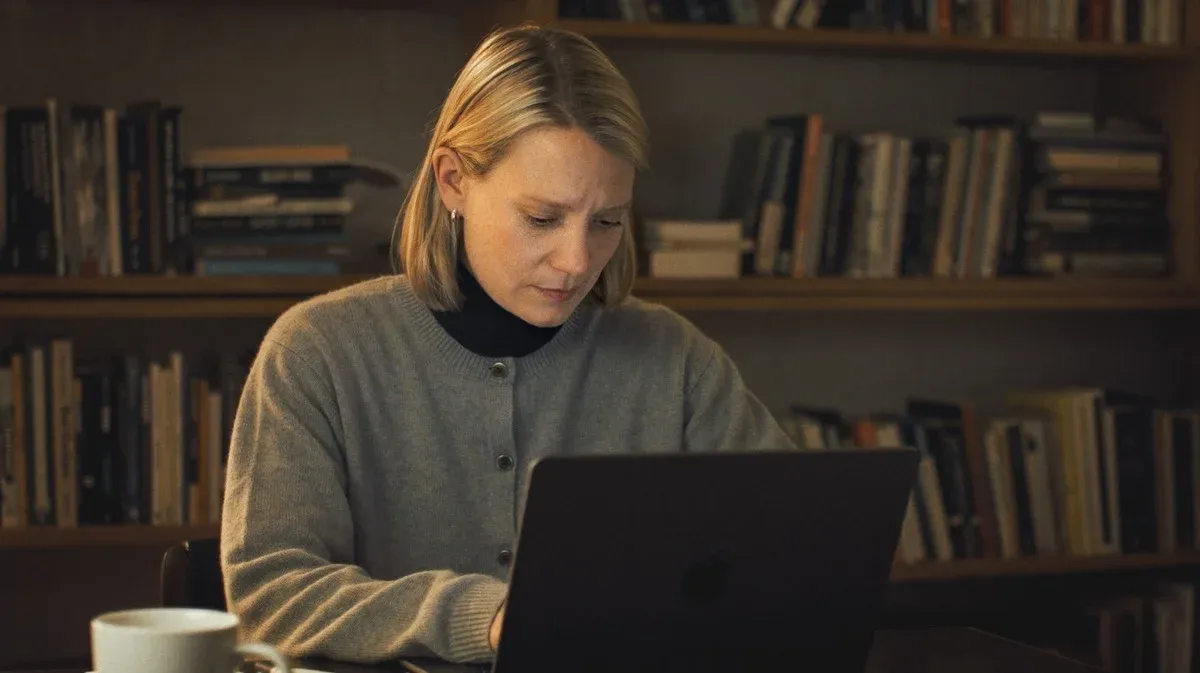
Agata, a Polish-born writer living in Australia (like director Kuba Dorabialski and star Mia Wasikowska), is persuaded by her publisher to housesit for a friend in Sarajevo, in hopes it will inspire her to write a new book. She does end up conceiving a story set during the 1992–1996 siege, hoping to use her time there to research and interview people who lived through it — only to discover that it's not well received when an outsider tries to lay claim to a tragedy that has already been told many times over, and worse still, for a work of fiction.
Traces of the past are everywhere (including remnants of the 1984 Winter Olympics), and historical memory hasn't yet faded; but who does that memory belong to? To those who lived it, to journalists, to historians, to artists? Agata goes through a small creative and, above all, moral crisis, but every story can have a key that unlocks how it should be told: the film's long ending, which presents the writer's own words almost without mediation, offers one possible example.
Dio ride
Venice Open - Out of Competition (Closing Film)
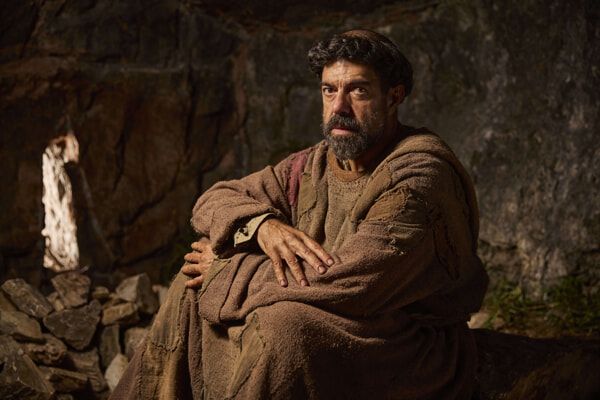
The closing slot of Venice 83 went to Giovanni Veronesi, an established director who had never before been invited to the festival. His film is set in the 1600s: Franciscan friar Leopoldo da Casamacchia (Pierfrancesco Favino), opposed by those who dislike his overly playful, simple way of preaching the Gospel to the people, is accused of heresy. Pope Innocent X assigns the task of trying him to Cardinal Vincenzo Maculani (Silvio Orlando), an inquisitor who had previously taken part in the trial against Galileo.
The Church of that era was still deeply conservative, and the idea that someone could make the faithful laugh while preaching was unthinkable. The friar is, admittedly, endearingly funny and knows how to connect with the uneducated, though he's certainly not a comedian in the modern sense (indeed, watching the film, you're more likely to cry than laugh). The film suggests that one of his real offenses was drawing more followers than conventional clergymen managed to, and that the popular following of such a humble, poor man was seen as a graver sin than anything he actually said.
His strength, compared to his accusers, lies in the certainty that when faith is sincere, it's far easier to embrace and share it; this conviction leads him to believe that God isn't the stern figure of the era's iconography but someone who can also smile — a notion that unsettles the cardinal's rigid political pragmatism, eventually earning his respect. Friar Leopoldo is an odd, ultimately deeply moving character who, in a way, anticipates by several centuries what Pope Francis once said: "Can one laugh about God too? Of course, and that's not blasphemy; you can laugh, just as you play and joke with the people you love."
Spotlight: Ellen Burstyn
Actress Ellen Burstyn, recipient of the Golden Lion for Lifetime Achievement at the 83rd Venice Film Festival, has had an unusual career — starting with the fact that she became famous at forty, an age at which many Hollywood actresses already struggle to find work.
Several roles from the early part of her filmography are deeply tied to the relationship between faith and science, between good and evil: the mother in The Exorcist (1973), who first tries to treat her daughter's inexplicable, violent behavior through medicine, and only later, desperate and disbelieving, turns to two exorcist priests; the woman who heals through the laying on of hands in Resurrection (1980), a gift used selflessly that some believed divine, others diabolical. These two films earned her two of her six Oscar nominations, the most recent in 2021. The other defining trait of her career is longevity: at 93, she's still active, and in Venice she starred in two films.
In Maggie Gyllenhaal's short Flesh Impact, she portrayed what a hundred-year-old Marilyn Monroe might have looked like, giving voice and body to a bold woman who managed to survive an entertainment industry that had wrung her dry without mercy. In Kornél Mundruczó's Place to Be, she's the central figure from start to finish: an elderly widow with nothing left to ask of life, who sets out to return a pigeon that flew into her home to its owner — first alone, then alongside a real estate agent she befriends along the way, who's struck by the odd reason for her trip.
Keeping the pigeon in a cage, she thinks about her children, who want to put her in a nursing home — partly out of concern for her safety, partly so they can sell her house — but she refuses. In doing so, she embodies issues increasingly relevant today: the aging population in Western countries, its impact on the quality of life for the elderly, and the question of who should bear the economic and social burden of their care. No one could have portrayed these themes better than Ellen Burstyn.