

We live in a time when it's impossible to attend a major film event without the major political issues of the moment taking over from the cinema itself — at least until the films are actually watched. Even before it began, the 83rd Venice Film Festival was already at the center of controversy: disappointment over the small number of women directors in competition, calls not to forget Palestine, and even bewildering Ukrainian protests over the presence in competition of a dissident Russian director (who has even renounced his Russian citizenship). The same issues seem to recur cyclically, which means solutions are still lacking. Then, fortunately, the festival begins — this year celebrating a star like George Clooney with a Golden Lion for Lifetime Achievement that arrived, perhaps, a little too early.
The two opening films of the Competition and Orizzonti sections are both inspired by biographical stories that had already been reimagined in literary works. Danny Boyle's Ink, based on James Graham's stage play, tells of when Rupert Murdoch bought the Sun newspaper in 1969 and the editor he chose, Larry Lamb, turned it into England's most-read paper — at the expense of quality. This fine reconstruction of a time when publishing still mattered has an ambiguous appeal, since we're led to sympathize with the underdogs and outcasts (Murdoch because he was Australian, Lamb because he was thought not sharp enough to run a newspaper), who take their revenge against the snobbery of British publishing — but do so by lowering, for the first time, the quality of information that is essential to the proper functioning of democracies.
Alina Marazzi's The Girl with the Leica, on the other hand, is based on Helena Janeczek's novel reimagining the life of photographer Gerda Taro, long forgotten after her premature death. Unfortunately, a character of such enormous charisma and vitality has not found the ideal performer: the film's Gerda doesn't make us understand why everyone hung on her every word, including Robert Capa, who without her would probably never have become the most celebrated war photographer of the twentieth century. Although the film lacks the impact of Taro's photographs — she took remarkable shots during the Spanish Civil War — it does retain Marazzi's usual skill at seamlessly weaving real archival material into the fictional scenes. It's to these interludes that the sense of the importance of visually documenting historical events is entrusted, so that nothing can be hidden or forgotten — just as Taro herself set out to do, bearing witness with her photographs to the advance of fascism in Spain and across Europe.
While waiting to see the other films, the press preview of the Venice Immersive section confirmed that virtual reality cinema too, which almost always requires a headset (though not always), tackles the social issues of our present with particular intensity. Here is a brief, considered selection.
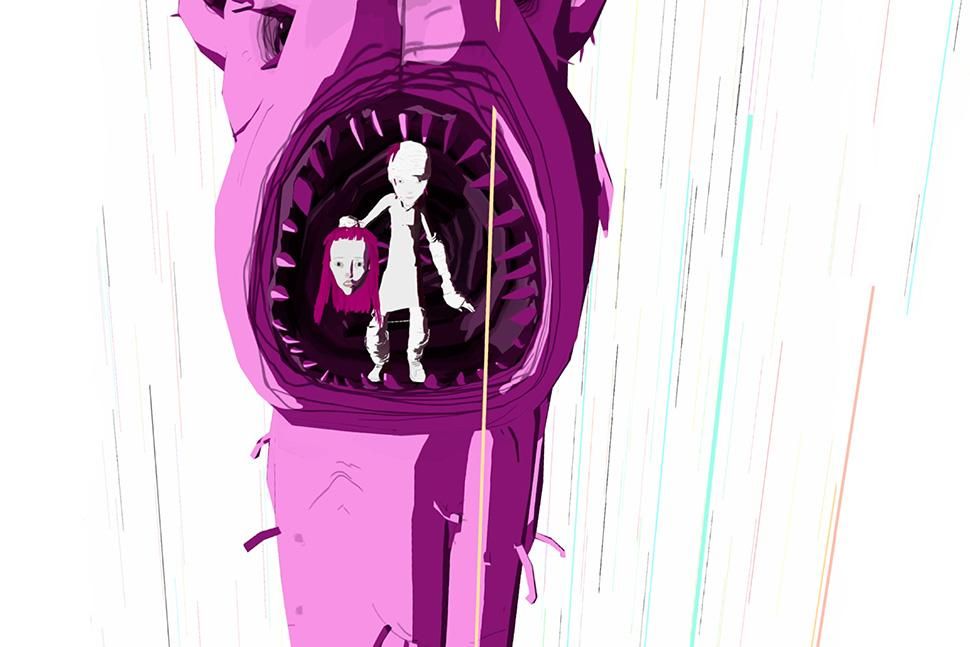
Eyes of Shame (Gėdos akys)
Venice Immersive - Competition
Lithuanian director Tomas Tamošaitis, having volunteered at a hospital for adolescents with serious health problems, was so struck by the experience that he wanted to try to describe what it means to be forced to stay in there. The viewer is effectively forced to adopt the point of view of a patient (rendered in stylized animation), but with only limited ability to intervene. The girl, anorexic, refuses to eat an egg and is therefore almost always tied to her chair; only in her memories, always marked by traumatic experiences, does she move — but she cannot change the past. The hospital staff's obsession with the egg, including attempts to force it into the protagonist's mouth, places us in the powerless position of someone who isn't truly being cared for, but treated with an insensitivity disguised as medical treatment. And yet, precisely by seeing the world through the patient's eyes, we grasp a humanity that, from the outside, people perhaps prefer not to see.
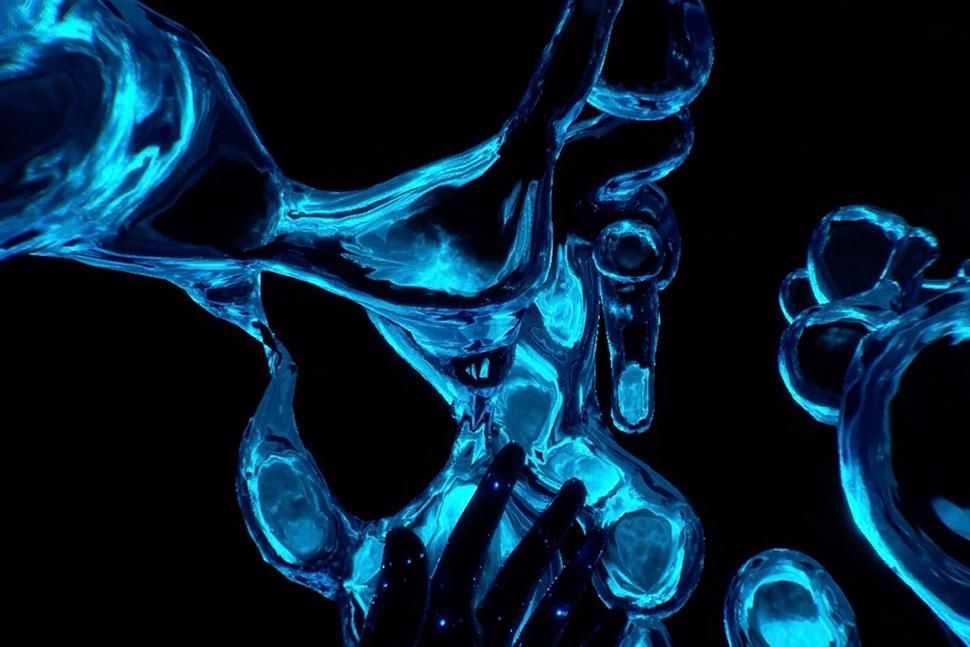
Nox
Venice Immersive - Competition
If art can also be a form of healing, then for young Nakada Rio, making this animated short was the best way to courageously share her experience of mental distress that turned into post-traumatic stress. The director, not yet twenty years old, tried to take us inside her mind, returning to the time when she had to face a total distortion of reality that felt unbearable to her. It's an intense and unsettling experience, made more so by the near-total lack of control the viewer has (aside from a few non-essential hand interactions), conveying a loss of rationality, self-esteem, and acceptance of social rules in a way that offers no way out — only a continuous descent into one's darkest side. And yet there is hope, as the very making of this bold autobiographical short in virtual reality demonstrates.
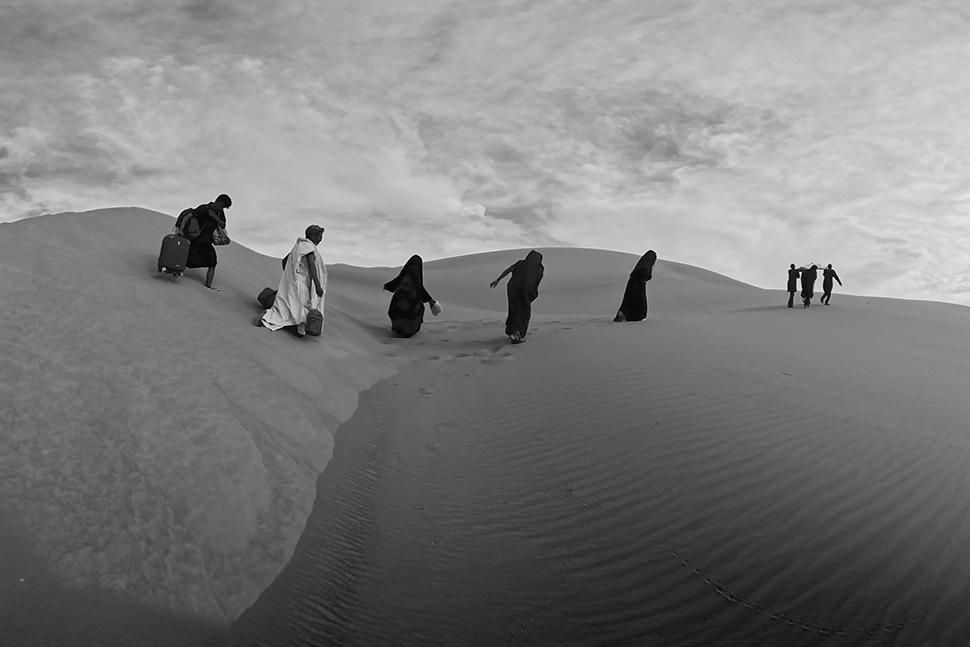
Artou
Venice Immersive - Competition
The first virtual reality film by one of the most important contemporary African directors, Abderrahmane Sissako, is a journey in the opposite direction from the migrations of our times: a return from Europe to Mauritania — but the one making the journey is a dead man who wishes to be buried in his native village. The first leg, by plane, is easy; carrying a coffin along a river or across a desert is far less so. The bond with one's roots is so strong that it doesn't stop the family, and this unshakeable determination to complete the journey home cannot help but evoke the emigrations of anyone forced to leave their homeland out of necessity, who would nonetheless stay if conditions allowed it. Being silent witnesses to this final journey allows us to observe, with great respect, another culture grappling with the mystery of death — a mystery that, however, unites us all.
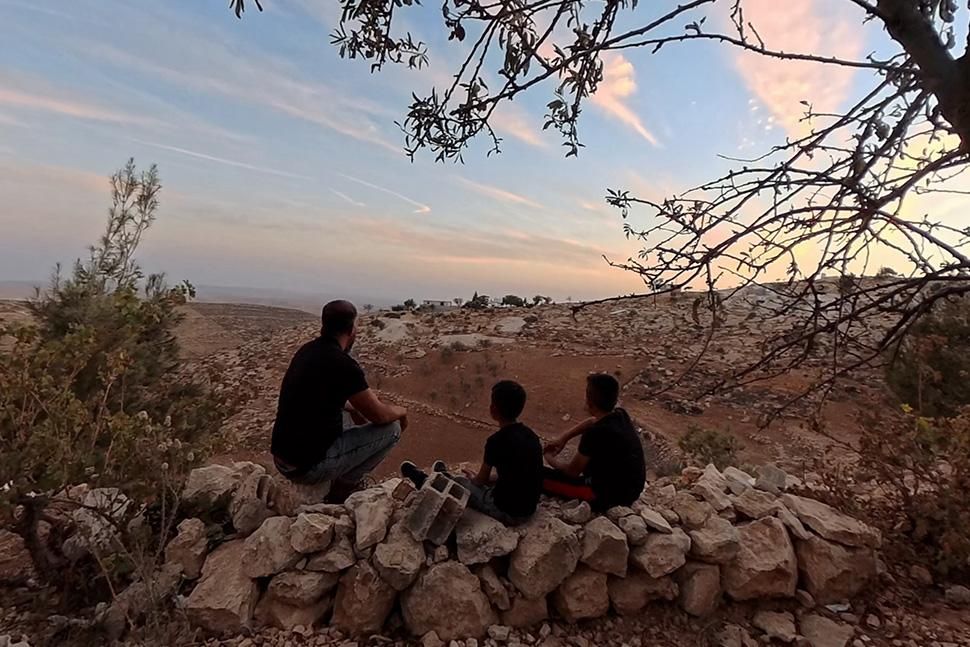
Raj'in (We Shall Return)
Venice Immersive - Competition
It is dangerous for anyone, with any passport, to go to the West Bank: settler violence is no longer reserved solely for Palestinians — it spares no one anymore. This documentary makes possible what would otherwise be difficult or impossible: seeing the situation in the West Bank from within, with a 360-degree view. Destroyed homes, makeshift shelters, grazed-out pastures, distant movements that could be approaching violent settlers, children who admit they're afraid to sleep. All of this was filmed during moments of